
Sermon
Proper 11 Year A
Sunday, June 14, 2026
The Rev. Lucia Lloyd
Share This Sermon
Scripture Reading
Select the Bible reference below to read the passage without leaving the sermon.
We begin with a description of the situation we are walking into, in today’s gospel passage, and what Jesus’ response to it is. “When Jesus saw the crowds, he had compassion for them, because they were harassed and helpless, like sheep without a shepherd.” This phrase “sheep without a shepherd” is drawn from 1 Kings 22:17. It also goes beyond that, because there are numerous scriptures in the Old Testament that say it is the responsibility of kings and religious leaders to be shepherds of their people. However, Matthew tells us that there is instead this crisis of leadership. As the scholar Warren Carter points out, the people of Jesus’s day were “oppressed, downtrodden, beat-up, and crushed. The historical and literary contexts indicate Rome and the religious elite as those who inflict social, economic, political, and religious abuse with misrule.” [Warren Carter, Matthew and the Margins: A Socio-Political and Religious Reading, JSNTSup 204 (Sheffield: Sheffield Academic, 2003), 230.]
Often the people who suffered from these systemic abuses were looked down on with contempt, or simply not noticed at all. But Jesus shows us a very different kind of leadership. He sees the people. He notices the ways they are harassed and helpless, like sheep without a shepherd. And, Matthew tells us, he feels compassion for them. As Canadian scholar Danny Zacharias points out, Jesus’ “compassion for the people is not abstract; it moves him to action. He sees their suffering, their lostness, and recognizes their need for leadership and care.” Zacharias goes on, “As an Indigenous reader of this text, I cannot help but see the confluence of understanding around what it means to be a leader. In many Indigenous cultures, leadership is not about hierarchy (Who am I in charge of?) but about service (Who can I help?). A true leader is one who cares for the people, ensuring their well-being. Much like a Wisdom Keeper or Medicine Man, Jesus responds to the needs of the people, embodying a leadership that is deeply relational and motivated by compassion.” [Danny Zacharias quotations are from https://www.workingpreacher.org/commentaries/revised-common-lectionary/ordinary-11/commentary-on-matthew-935-108-9-23-3]
The first message of today’s sermon is to remember that this is the kind of leadership of care and compassion we have in Jesus. If you go through times when you are feeling harassed and helpless, like a sheep without a shepherd, remember that Jesus sees you, has compassion on you, and cares for you. When you see others in society who are harassed and helpless, like sheep without a shepherd, remember that Jesus sees them, has compassion on them, and cares for them.
That is not the only message of today’s sermon. Our gospel passage specifies that Jesus exercises his leadership of compassion by meeting people’s spiritual and physical needs: “Then Jesus went about all the cities and villages, teaching in their synagogues, and proclaiming the good news of the kingdom, and curing every disease and every sickness.” Still, the needs are too great for just one person, even Jesus, to meet all by himself. So Jesus summons his disciples and tells them to go carry out this ministry: “Proclaim the good news, ‘The kingdom of heaven has come near.’ Cure the sick, raise the dead, cleanse the lepers, cast out demons. You received without payment; give without payment.” Zacharias explores what this means for the twelve disciples and for us: “These verses capture the heart of discipleship: responding to the needs of the people, relying on God’s provision, and carrying forth the work of healing and restoration. To do this, Jesus’s disciples need to imitate their Lord. This passage challenges us to see discipleship not as passive belief but as active participation in the work of restoration.” He goes on, “Depending on our church traditions and the nations we reside in, gospel work that focuses on healing and justice can be suspect, seen as “social justice” disconnected from the proclamation of the good news. Similarly, some ministries focus their work entirely on the teaching and proclamation of the gospel with very little thought toward justice and healing. Jesus shows us that the work of the compassionate shepherd is holistic and integral; the preaching of the gospel is never separated from the embodied work of the gospel to bring healing and wholeness.”
The second message of today’s sermon is that just as Jesus called the twelve to participate in his mission to those in need, Jesus calls us as disciples to participate in his mission to those in need. As Zacharias puts it, “The disciples’ mission is deeply restorative. They are sent to heal the sick, raise the dead, cleanse those with leprosy, and drive out demons (10:8). This is not just about physical healing but about restoring people to wholeness—socially, spiritually, and physically. Jesus’s commissioning of the Twelve challenges modern disciples to see faith as active participation in God’s integral mission. The work of healing, restoration, and justice is not confined to Jesus alone; it is entrusted to his followers.”
Now you might be thinking, “Well, that’s all great, except that Jesus gave his disciples miraculous powers, and last time I checked, I don’t happen to have any miraculous powers.” Fair enough. So I’d like to look at today’s gospel passage through the lens of a different passage, also in the gospel of Matthew: the parable of the talents. You remember that Jesus talks about a master who entrusts his property to three of his servants while he’s away on a journey. To one servant he gives one talent, to another he gives two talents, to another he gives five talents. The servant with two talents trades with it and makes two more talents, and the servant with five does the same thing. When the master comes back, he gives identical praise to both of them, calling them good and faithful servants. It’s clear that what is important is not how much they have, it’s what they do with what they have. Both of them use the different amounts of talents they have, and both of them are praised for it. The servant who could have traded with the one talent he had, but did nothing with it instead, is the one who is criticized.
Likewise for us. The important thing is not how much ability we have; the important thing is what we do with the ability we have. Every single one of us has the ability do acts of kindness, acts of help to those who suffer, acts of generosity, acts of speaking up for justice, acts of rejecting discrimination against the marginalized, acts of service, acts of leadership, acts of telling the truth, even acts of simply paying attention to people who get very little positive attention. What Jesus asks of us is to do what we can.
It is also important to remember that we choose whether to do the good we can. The outcome of the good we do is outside our control. Sometimes we choose to do good, and despite our best intentions, the results of our efforts fall flat. Still, what matters is we’ve done our part. Sometimes we choose to do good, and the effects are pretty much what we expected. That’s a positive thing to add to the good in the world. Sometimes we choose to do good, and the outcome has a positive influence way beyond what we expected. I’ve had people come up to me and thank me in a heartfelt way for some kind thing I had done or said that really meant a lot to them, even though at the time it seemed like no big deal to me. Sometimes, the kind thing I had done or said, that meant so much to them, is something I do not even remember doing or saying. Or one kind deed can set in motion a ripple effect that touches many people’s lives. Who knows whether God might use your simple act of kindness to work miracles?
The point is that it’s a mistake to get too caught up in the outcome, which is outside our control. The best place for us to focus is on what’s within our control, which is whether we choose to do good.
Blessedly for us, there are a wide variety of ways to do the work of healing, restoration, and justice. I absolutely thank God for doctors, nurses, and every other medical person who promotes healing. Still, there are plenty of other people with no medical training who’ve had a healing influence in my life when I was sick or injured. People who listened to the ups and downs of my emotions when I was sick. People who prayed for me. People who knitted me prayer shawls. People who sent cards or little gifts. People who drove me or ran errands for me. People who filled in for me to lighten my workload. All of them had a healing influence on my life.
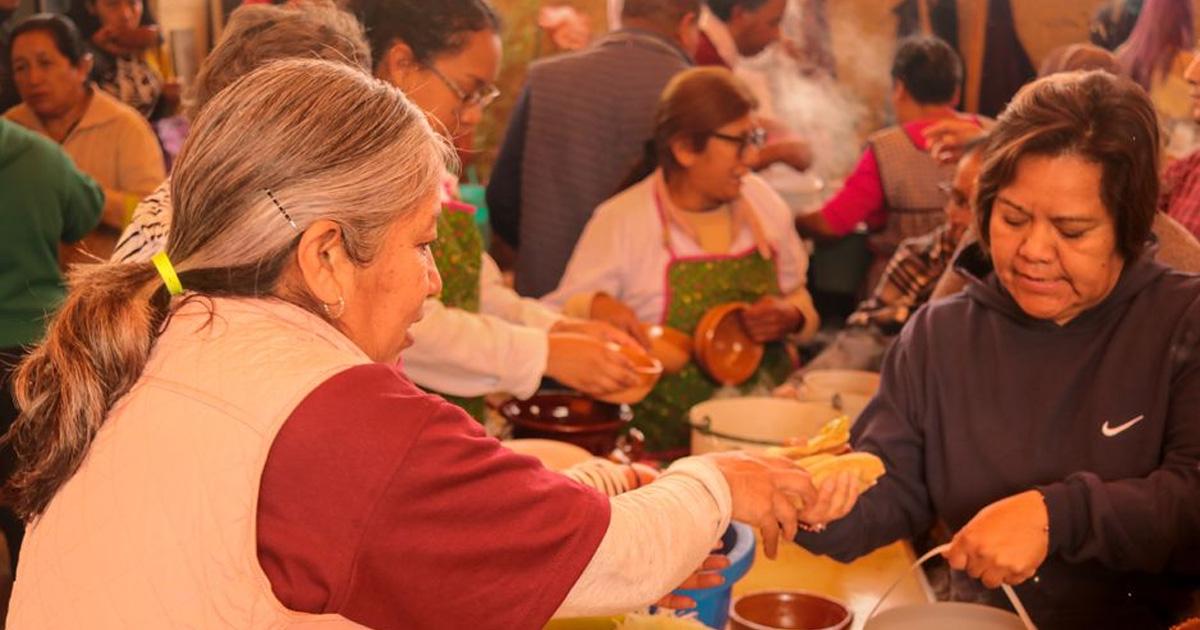
I’m someone who happens to have quite a bit of privilege. There are even more ways to carry out Jesus’ teachings to do the work of healing, restoration, and justice for folks who don’t have a lot of privilege. Our church’s Saturday Soul Suppers is an excellent example. To help provide delicious, nourishing food to folks who don’t always have good food contributes to health and healing. To form caring relationships with folks who are often ignored or rejected contributes to restoration. To treat people with dignity, to see their dignity, and to let it motivate us to work for a society and a political system that respects their dignity, contributes to justice. These ways of contributing to Jesus’ work of healing, restoration, and justice are activated in the Migrant Worker Dinner, the Christmas hampers, and plenty of other ministries of our congregation. We can carry out these ministries that Jesus teaches us to do with our time and talent. We can carry out these ministries that Jesus teaches us to do with our treasure, by giving generously to the programs themselves, and by giving generously to the operating budget of our church that provides all the structures that enable these ministries to function well.
None of us does these ministries alone. Even Jesus doesn’t do these ministries alone. Our gospel passage starts when Jesus sees the crowds and has compassion for them because they were harassed and helpless, like sheep without a shepherd. During his lifetime on earth Jesus’ compassion moves him to action, proclaiming the good news of the kingdom, curing every disease and every sickness. But the harvest is too big for one labourer to do alone, so he sends out the twelve disciples, telling them to do what he is doing. We too are Jesus’ disciples. Jesus calls us to participate in his ministries, and Jesus is at work in us as we carry out ministries of compassion, proclamation, healing, restoration, and justice among the people Jesus loves.