
Sermon
Reflection – Reign of Christ – Year C
Sunday, November 23, 2025
Rev. Canon Susan Sheen
Share This Sermon
Scripture Reading
Select the Bible reference below to read the passage without leaving the sermon.
May the words of my mouth and the meditations of our hearts and minds be now and always acceptable in your sight, O God our Rock and our Redeemer. Amen.
The Christian Church’s feast day of Christ the King that we celebrate today on the last Sunday before Advent – or as we Anglicans usually call it: “The Reign of Christ” – is a relatively new special day in our church calendar.
The feast day of Christ the King was created in 1925 by Pope Pius XI. Why? Because the Church needed especially the image of Christ the King at that time. On its first celebration, Mussolini had been leader of Italy for three years – Hitler had been out of jail for a year – his Nazi party was growing in popularity – and the world lay in a Great Depression. Secularism and atheism were spreading. In such a time, Pope Pius wanted to a]irm that despite these new dictators and false values, Christ is King of the universe.
So the feast day became a symbol – a metaphor – a statement of life’s fundamental question for times when our world has been particularly broken. At such times it’s especially important to ask the questions: Who exercises dominion over us? Who or what rules our lives - and how? And if we pick up on that theme, then the feast of Christ the King – or the Reign of Christ – makes sense for us today with its questions of power. Who rules our lives? Who dominates the culture of our country – of our world?
Once upon a time there was a great king who decided to share his wealth with his subjects. He placed all his treasures in the courtyard of his palace. And he put his throne in the centre. Then he gathered his subjects together and told them to choose any of his treasures that they would like – but not to leave the courtyard until he dismissed them.
His subjects began to choose the king’s treasures. But one elderly woman approached the king and asked: Your majesty, have I understood correctly? If I choose any- thing in this compound, it will be mine? The king said yes. She thought for a moment – looked at the king – and said: “Your majesty, I choose you”! The crowd waited in silence to hear what the king would say. But he smiled and said: “You have chosen most wisely. Because you chose me, all my kingdom will be yours as well.” And there was much joy in the kingdom that day, because the elderly woman was much loved, and everyone shared in the king’s treasure.
That story, I think, helps us get a handle on Christ the King Sunday. We’re invited on this last Sunday of the church year to remind ourselves of what kind of king Jesus is, because Jesus Christ is king in a way that gives new meaning to our 21st.C. understanding of sovereignty.
On the one hand, we see the generosity and the abundance of the monarch – on the other, we’re invited to respond to the king’s invitation. Like the king in the story, Jesus emptied himself – made himself available to the human community in love – and let himself be vulnerable to human choices.
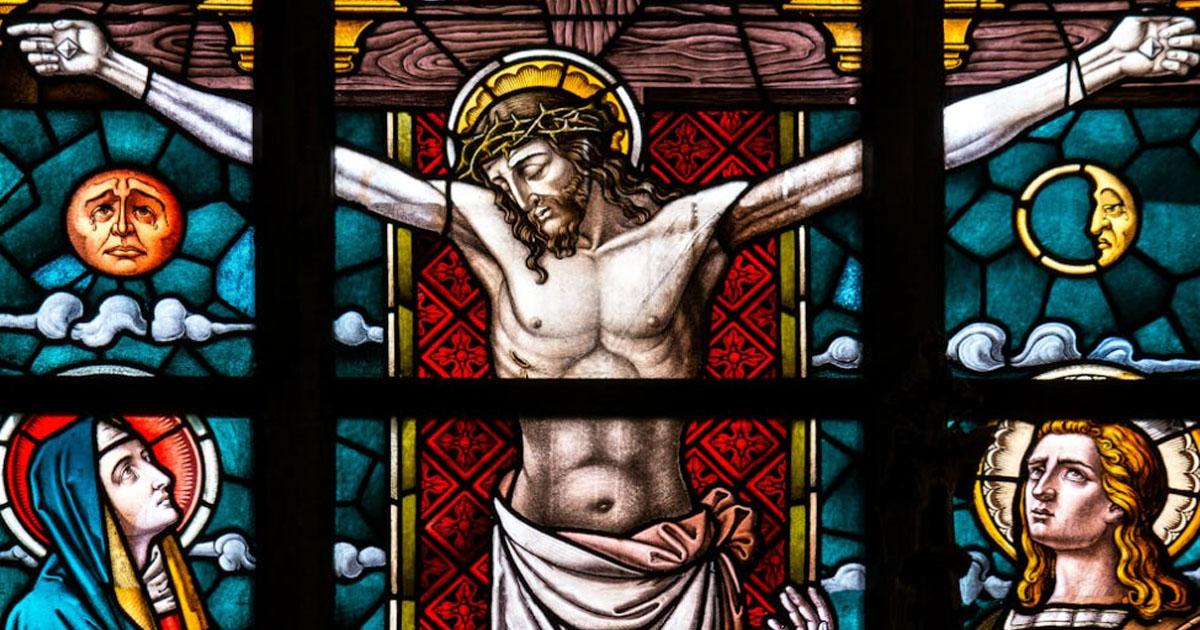
Christ’s rule is not about earthly power or wealth. It’s about love and mercy and peace. He leads us by giving his life for us. This feast reminds us of what real kingship means in God’s eyes. It reminds us that Jesus is the head of all creation. Yet he chooses to care for us as a shepherd cares for his sheep – and he calls us to follow this way of kindness and service.
I often think of a story that Bishop Colin Johnson told after he and a group of senior clergy had visited a slum on the outskirts of Nairobi. Their Kenyan host had said that an elderly, dying man in one of the hovels had asked them to visit him. Colin’s reaction was that it would be an intrusion on the privacy of this poor man. But when they entered the hovel and spoke with the man, he was overcome and grateful that leaders of the Church would take the time and make the e]ort to come and visit him. Their visit showed him that he was worthy of God’s love – that he could now die in peace.
A few days ago you all received an email with our Bishop Andrew’s weekly letter to the people of the diocese. In it he asked for prayers for himself and a group of clergy as they go to the Holy Land at the beginning of December – a pilgrimage that has been postponed many times because of the ongoing violence and unrest in that part of the world.
He writes: “With the glimmer of peace now comes a window of opportunity for us to go, to learn, to listen and to pray”.
They will be visiting some of the holy sites – but even more importantly, they will have conversations with Jewish Rabbis and with Palestinian leaders. And they will spend time with members of the Christian communities – listening to their stories – learning from their experiences – engaging in dialogue and prayer and Bible study and worship – open to the Word of God – supporting, by their presence, fellow Christians who have su]ered greatly for a long time.
In whatever situation we find ourselves, we are called to follow Jesus’ way of love and service. We are called to help build the kingdom of God on earth.
Jesus, in his earthly ministry, had that one theme – that one goal: “the kingdom of God” – to make the world as God would want it to be – a world where justice, peace, love and compassion rule – and his invitation to us is to work for that kingdom too – where relationships are more important than material possessions – where all have enough – where all are included.
Herbert O’Driscoll, in his commentary on the gospel reading for today, writes: “There is another wonderful and deliberate contrast in this gospel passage, chosen for the Feast of Christ the King. Perhaps the word paradox is better than the word contrast, but you can decide. It strikes me as I read, “Jesus, remember me when you come into your kingdom”. As you know, those are the words of the thief hanging beside Jesus. Is it not striking that a world-wide Christian faith, when it wishes to celebrate the kingship of its Lord, deliberately receives the attribution of kingship from a criminal undergoing public execution?” The thief is the one who recognizes that Jesus is a king – and he asks to be part of Jesus’ kingdom of love and justice.
We too have prayed today: “Jesus, remember me, when you come into your kingdom”.
That kingdom is not a temporary one. It’s forever - and he invites us to be part of it. Jesus’ power comes both from his sacrifice and his love of others. And when we live in his love, we share in the joy of his kingdom, both now and in the life to come. Amen.